


How to Identify Your Child’s Learning Style and Teach in a Way That Actually Works
If you’ve ever looked at your child and thought, “Why is this so hard for them when I know they’re smart?”—you are not alone as a homeschooling mom.
So many children are labeled as distracted, resistant, behind, or unmotivated when the real issue is much simpler: they are being taught in a way that does not match how they learn best.
Not every child absorbs information the same way. Some children need to see it. Some need to hear it. Some need to move, touch, build, and experience it before it clicks. Others need to read it, write it, and process it through words. Everyone is different.
When you understand your child’s learning style, it can change everything. Whether you are homeschooling or supplementing your child’s public or private school education, this post is for you!
Once you identify your child’s unique learning style, lessons become less frustrating. Meltdowns can decrease. Confidence grows. And instead of forcing your child into one rigid method, you begin to teach the child in front of you.
That is where real learning starts.
What is a learning style?
A learning style is the way a child most naturally takes in, processes, and remembers information.
It does not mean your child can only learn one way. Every child can learn through multiple methods. But most children tend to have one or two approaches that feel easier, faster, and more natural to them.
The four most commonly discussed learning styles are:
Visual
Auditory
Reading/Writing
Kinesthetic
Think of these less like strict boxes and more like clues. They help you notice how your child’s brain tends to work so you can support them more effectively.
Why identifying your child’s learning style matters
When a child is taught in a way that matches how they learn best, you may notice:
better focus
faster understanding
improved memory
less resistance to schoolwork
more independence
more confidence
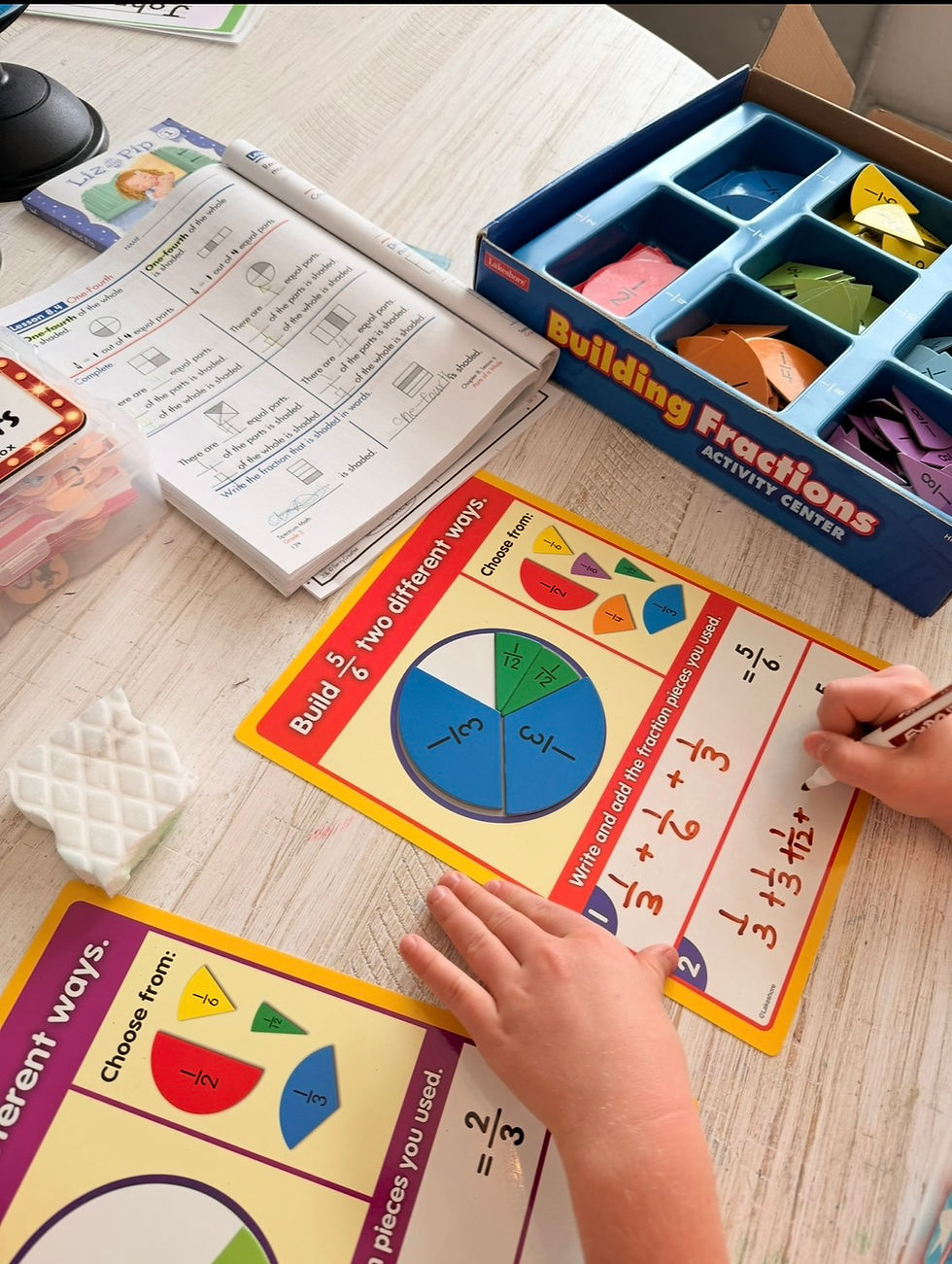
A child who struggles with traditional worksheets may thrive with manipulatives. My son despises writing, but loves to tinker with objects.
A child who seems inattentive during lectures may suddenly light up during discussion, because they get to communicate their ideas. A child who forgets what they read may remember everything they watched on a chart or diagram.
This is why a one-size-fits-all teaching style often falls short. It is not always a motivation issue. Sometimes it is a mismatch issue.

Important note before we begin
Children are often a blend.
You may have a child who is strongly visual but also benefits from movement. Or a child who loves reading and writing but still needs discussion to fully process ideas. Learning styles can also shift depending on the subject. A child may prefer hands-on learning for math and science but visual learning for history and reading.
Your goal is not to label your child forever. Your goal is to observe patterns and use that information wisely.
How to identify your child’s learning style
The best way to identify your child’s learning style is to watch what they naturally do when they are trying to understand, remember, or explain something.
Here are some questions to ask yourself:
Does my child prefer pictures, diagrams, and demonstrations?
Do they remember what they hear more than what they read?
Do they like writing things down, making lists, or reading directions independently?
Do they need to move, touch, act out, or physically engage with something to understand it?
When they are stuck, what seems to help most?
When they are excited about learning, what is usually happening?
You can also pay attention to everyday behavior.
When your child tells you about their day, do they say:
“I saw…”
“I heard…”
“I wrote…”
“I did…”
That language can sometimes reveal how they process the world.
Another helpful clue is what your child does when learning comes easily. We often focus on struggle, but success leaves clues too.

The 4 main learning styles explained
1. Visual learners
Visual learners understand and remember information best when they can see it.
These children often do well with:
pictures
charts
diagrams
maps
graphic organizers
color coding
demonstrations
videos
written examples
Signs your child may be a visual learner
Your child might be a visual learner if they:
notice details quickly
enjoy books with illustrations, diagrams, or maps
remember faces more easily than names
prefer to watch you do something before trying it
benefit from seeing instructions written down
like colors, highlighting, sorting, and organizing visually
seem to understand more after watching a video or seeing a model
What visual learners may struggle with
Visual learners may struggle when:
instructions are only spoken aloud
lessons are lecture-heavy
they are expected to remember verbal directions without a visual support
information is presented in long blocks with no visual structure
How to teach a visual learner
If your child is a visual learner, try:
anchor charts
picture schedules
diagrams and labeled drawings
flashcards
timelines
whiteboard demonstrations
graphic organizers
mind maps
color-coded notes
educational videos followed by discussion
For example, instead of only explaining the water cycle out loud, draw it together. Instead of teaching spelling words verbally, write them in color, sort them by pattern, and display them where your child can see them often.
Visual learners often thrive when information is made visible.
2. Auditory learners
Auditory learners process information best through hearing and speaking.
These children often learn well through:
discussion
read-alouds
verbal repetition
music
rhymes
storytelling
podcasts
oral explanations
Signs your child may be an auditory learner
Your child might be an auditory learner if they:
remember conversations well
enjoy being read to
talk through their thinking
ask lots of verbal questions
like songs, rhymes, and repetition
can repeat back information they heard
seem to understand better after talking it out
What auditory learners may struggle with
Auditory learners may struggle when:
they are expected to work silently for long periods
directions are only written and never explained aloud
they are given visual-heavy material with little discussion
they cannot verbalize what they are learning
How to teach an auditory learner
If your child is an auditory learner, try:
reading lessons aloud
having them explain answers verbally
using songs and chants for memorization
turning facts into rhythms or rhymes
discussing books instead of only assigning written responses
using audiobooks
letting them narrate what they learned
asking oral comprehension questions
encouraging “talk it out” problem-solving
For example, if your child is learning multiplication, try skip-counting chants or math facts set to rhythm. If they are reading a story, let them retell it in their own words before asking them to write about it.
Auditory learners often need to hear it and say it before they truly own it.
3. Reading/Writing learners
Reading/writing learners prefer information through words.
These children are often drawn to:
books
written directions
note-taking
journaling
lists
definitions
written explanations
copying information to remember it
Signs your child may be a reading/writing learner
Your child might be a reading/writing learner if they:
love books and independent reading
ask how to spell words
enjoy making lists
like writing things down
prefer written instructions over verbal ones
remember better when they take notes
like worksheets, written responses, or journaling
What reading/writing learners may struggle with
Reading/writing learners may struggle when:
everything is explained only verbally
they are rushed through lessons without time to read or write
they are expected to learn mostly by watching or listening
they have ideas but no chance to organize them through writing
How to teach a reading/writing learner
If your child is a reading/writing learner, try:
checklists
written directions
notebooks and journals
copywork
vocabulary lists
reading response pages
summarizing in writing
sentence stems
labeling and captioning
written review questions
For example, after a science experiment, ask them to write what happened and why. During history, let them create a timeline with written notes. In math, encourage them to write out the steps they used to solve the problem.
Reading/writing learners often flourish when language is organized on paper.
4. Kinesthetic learners
Kinesthetic learners understand best through movement, touch, and experience.
These children often need to:
move their bodies
manipulate objects
build
act things out
experiment
use their hands
learn through real-life application
Signs your child may be a kinesthetic learner
Your child might be a kinesthetic learner if they:
have a hard time sitting still for long
learn better when moving
enjoy building, creating, or taking things apart
need hands-on experiences to understand concepts
seem more focused during experiments, crafts, cooking, or outdoor learning
use gestures while explaining things
remember what they did more than what they heard
What kinesthetic learners may struggle with
Kinesthetic learners may struggle when:
learning is mostly seated and passive
lessons rely heavily on lecture or worksheets
they are expected to sit still before they are developmentally ready
abstract ideas are never connected to real life
How to teach a kinesthetic learner
If your child is a kinesthetic learner, try:
math manipulatives
science experiments
sensory bins
movement breaks
scavenger hunts
building models
acting out stories or history events
tracing letters in sand or shaving cream
jumping while skip counting
measuring while baking
nature walks with observation tasks
For example, instead of drilling sight words only on paper, tape them around the room and have your child run to the word you say. Instead of reading about plant growth only in a book, plant seeds and observe them daily.
Kinesthetic learners often need learning to become physical before it becomes meaningful.

What if my child seems like more than one type?
That is very normal.
In fact, many children are multimodal learners, which simply means they benefit from multiple approaches. You may notice:
visual + reading/writing
auditory + kinesthetic
visual + kinesthetic
auditory + reading/writing
This is why the best teaching often includes more than one method.
For example:
Read the directions aloud.
Show a visual example.
Let the child try it hands-on.
Finish with a written summary.
That kind of layered teaching supports more than one learning pathway and often helps information stick better.
How to observe your child at home
If you want a simple way to figure out what fits your child best, spend one to two weeks intentionally observing them during learning time.
Look for patterns like:
Which activities make them come alive?
Which activities lead to frustration fastest?
When do they remember information best?
What kind of support do they ask for?
What do they choose on their own when given options?
You can even test the same concept in different ways.
For example, teach the same topic:
once with a video or chart
once with discussion or read-aloud
once with writing
once with a hands-on activity
Then notice what helped it click.
This is one of the easiest ways to gather real information without overcomplicating things.

Common mistakes parents make
1. Assuming struggle means laziness
Sometimes a child is not refusing to learn. They are simply not connecting with the method being used.
2. Forcing one method for every child
What worked for one sibling may not work for another. Different children often need different tools.
3. Over-labeling
Learning styles are helpful, but they are not identity boxes. Use them as guidance, not limits.
4. Ignoring developmental needs
Young children especially need movement, play, and real-life learning. A child can be developmentally normal and still appear “distracted” in an overly rigid setup.
5. Thinking learning styles replace skill-building
Your child should still be exposed to multiple ways of learning. The goal is not to avoid challenge forever. The goal is to build from strengths while supporting weaker areas.
Simple examples by subject
Math
Visual: number lines, charts, color-coded steps
Auditory: math chants, verbal problem-solving
Reading/Writing: written examples, step-by-step notes
Kinesthetic: blocks, counters, measuring, cooking
Reading
Visual: picture walks, story maps
Auditory: read-alouds, narrations
Reading/Writing: independent reading, written responses
Kinesthetic: acting out stories, letter tiles, sight word games
Science
Visual: diagrams, life cycle charts, videos
Auditory: science talks, oral explanations
Reading/Writing: science journals, written observations
Kinesthetic: experiments, nature walks, model building
History
Visual: timelines, maps, illustrated books
Auditory: storytelling, audiobooks
Reading/Writing: notebooking, summaries
Kinesthetic: dress-up days, reenactments, projects
The best approach: teach the child in front of you
The beauty of homeschool or supplemental learning is that you do not have to stay stuck in one method.
You can pivot.
You can experiment.
You can notice what is working and let go of what is not.
That flexibility is powerful.
Your child does not need to fit into a system perfectly in order to succeed. Sometimes the most effective thing you can do is stop asking, “Why isn’t my child responding to this?” and start asking, “What does my child need in order to learn well?”
That question changes everything.
Final encouragement
If you are trying to identify your child’s learning style, do not overthink it.
Watch them.
Listen to them.
Notice what brings ease.
Notice what brings resistance.
Pay attention to where confidence shows up.
Your child is already giving you clues.
And once you start teaching in a way that honors how they were designed to learn, you may find that school feels less like a battle and more like a partnership.
That is the goal.
Not perfection.
Connection, understanding, and a method that actually works.
Quick recap: the 4 main learning styles
Visual learners
Learn best by seeing: charts, pictures, diagrams, examples
Auditory learners
Learn best by hearing: discussion, read-alouds, songs, verbal explanation
Reading/Writing learners
Learn best through words: books, notes, lists, writing, written instructions
Kinesthetic learners
Learn best by doing: movement, manipulatives, hands-on activities, real-life practice
Teaching Tool: Want a simple follow-up resource? Create a quick checklist for each of your children and jot down:
what helps them focus
what frustrates them
what they remember most easily
what kind of lessons they enjoy most
You may be surprised by how quickly the pattern appears. Just remember, you GOT this!!!!
For a full rundown of homeschooling tips and tricks, check out my guide, Homeschooling for the Modern Mom


Comments